No products in the cart.
Return To ShopWe ship globally.
We have special channel shipping
on many brands for guaranteed delivery.
Ask us on [email protected]

All peptides on this site are for research purposes only; not for human consumption
All peptides on this site are for research purposes only; not for human consumption
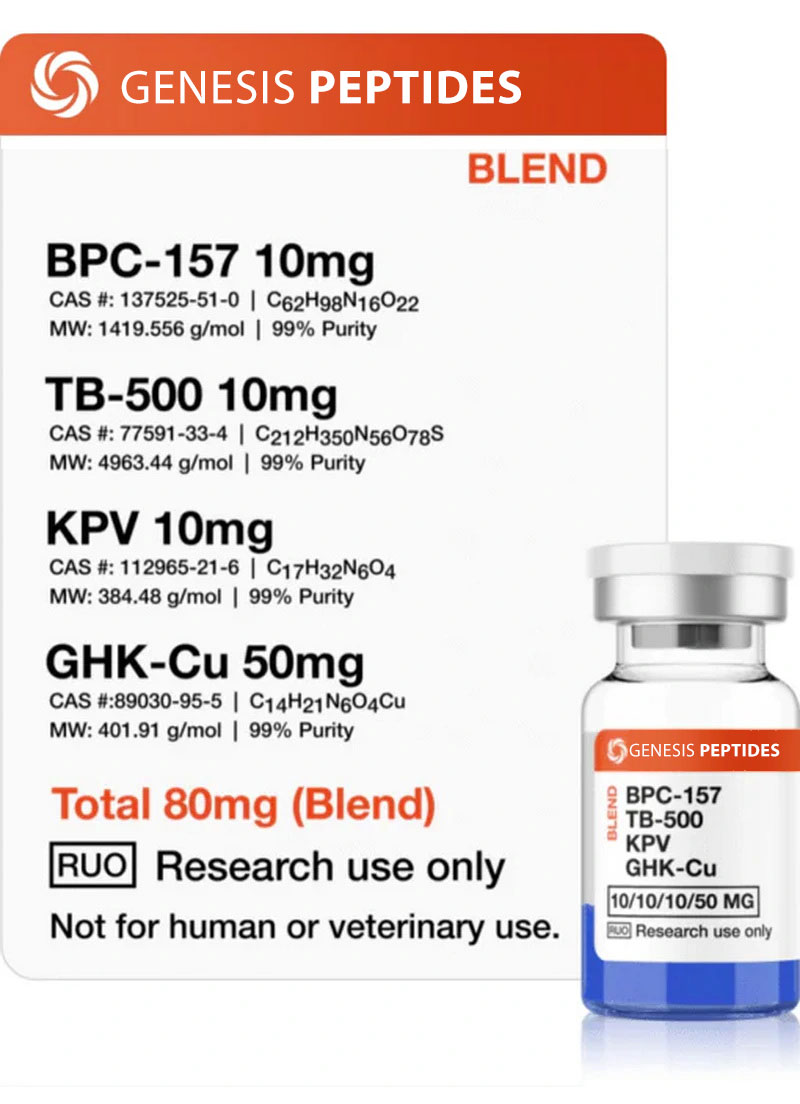
The difference between Glow 70 and Klow 80 is Klow 80 has the additional KPV 10mg. Glow 70 is without this KPV 10mg. Hence Glow 70 is 70mg whereas KLOW 80 is 80mg. Got it?
What Is GLOW Peptide Therapy?
GLOW is a powerful peptide injection therapy that combines:
- BPC-157 (5mg) – a gastric-derived peptide that promotes tissue healing
- TB-500 (10mg) – a synthetic form of thymosin beta-4 that regulates inflammation and cellular repair
- GHK-Cu (27mg) – a copper-binding peptide that stimulates collagen, elastin, and wound healing
This unique combination delivers full-spectrum regenerative support, from the inside out—targeting muscle, tendon, skin, fascia, and even blood vessels.
Mechanism of Action: How GLOW Works
Each peptide in GLOW has a distinct mechanism, but together, they work in synergy to create a comprehensive regenerative effect.
🔹 BPC-157: The Tissue Repair Catalyst
- Derived from: Body Protection Compound found in gastric juice
- Mechanism:
- Promotes angiogenesis (formation of new blood vessels)
- Enhances fibroblast migration and growth
- Improves collagen formation
- Reduces inflammatory cytokines (e.g., TNF-alpha, IL-6)
- Impact: Accelerates healing in tendons, ligaments, muscles, nerves, and the GI tract
🔹 TB-500: The Mobility Enhancer
- Synthetic version of: Thymosin Beta-4
- Mechanism:
- Increases actin production (a protein essential for cell movement and structure)
- Promotes wound remodeling
- Reduces fibrosis and scar tissue
- Downregulates NF-kB, a key driver of inflammation
- Impact: Enhances cellular repair, improves mobility, reduces joint stiffness
🔹 GHK-Cu: The Skin and Anti-Aging Powerhouse
- Naturally found in: Human plasma, saliva, and urine
- Mechanism:
- Binds to copper and delivers it into tissues
- Stimulates type I and III collagen production
- Increases elastin, glycosaminoglycans, and keratinocyte migration
- Acts as an antioxidant and anti-inflammatory compound
- Impact: Promotes firm, elastic skin; reduces wrinkles and pigmentation; enhances wound healing and hair growth
Benefits of GLOW Peptide Therapy
The synergy of BPC-157, TB-500, and GHK-Cu in one injection yields a broad spectrum of benefits:
✅ 1. Accelerated Healing
Ideal for those recovering from surgery, sports injuries, or orthopedic trauma, GLOW speeds up tissue repair—particularly in tendons, ligaments, and muscles.
✅ 2. Anti-Inflammatory Action
All three peptides have strong anti-inflammatory properties, helping reduce systemic inflammation, joint pain, and localized swelling.
✅ 3. Skin Rejuvenation
GHK-Cu has clinically demonstrated improvements in skin firmness, elasticity, and tone. Users often report smoother, younger-looking skin within 30 days.
✅ 4. Joint and Fascia Support
TB-500 enhances flexibility and mobility by targeting connective tissue and reducing fibrosis in muscle fascia.
✅ 5. Gut Healing
BPC-157 supports intestinal healing, making GLOW an excellent adjunct for those with leaky gut, IBD, or post-surgical GI recovery.
✅ 6. Enhanced Collagen Synthesis
GHK-Cu and BPC-157 stimulate collagen and elastin, helping strengthen tissue and reverse signs of aging or injury.
✅ 7. Hair Regrowth (Emerging)
GHK-Cu is being investigated for hair follicle stimulation, especially when combined with microneedling or PRP.
Who Can Benefit From GLOW Peptide Therapy?
GLOW is not just for athletes or post-surgical patients. Its broad spectrum of benefits makes it useful for a variety of conditions, including:
- Athletes recovering from injuries
- Post-surgical patients healing from orthopedic or cosmetic procedures
- Middle-aged adults with joint pain or decreased skin elasticity
- People with inflammatory or autoimmune conditions
- Anyone with GI dysfunction or gut permeability
- Patients looking for anti-aging and skin rejuvenation
- Biohackers and functional medicine patients optimizing recovery and performance
Whether you’re rebuilding tissue or reversing the effects of aging, GLOW offers a versatile, science-backed approach to regenerative health.
Glow Peptide Dosage Chart at 2mL
The centerpiece chart assumes exactly 70mg total material reconstituted with exactly 2mL, producing 35mg/mL. It converts common total-blend research amounts to U-100 units and liquid volume.
| Total GLOW amount | U-100 units | Volume | Calculation |
|---|---|---|---|
| 0.875 mg | 2.5 | 0.025 mL | 2.5 × 0.35 mg |
| 1.75 mg | 5 | 0.05 mL | 5 × 0.35 mg |
| 2.625 mg | 7.5 | 0.075 mL | 7.5 × 0.35 mg |
| 3.5 mg | 10 | 0.10 mL | 10 × 0.35 mg |
| 4.375 mg | 12.5 | 0.125 mL | 12.5 × 0.35 mg |
| 5.25 mg | 15 | 0.15 mL | 15 × 0.35 mg |
U-100 “units” are volume marks, not milligrams or biological activity units. One unit always represents 0.01mL on a U-100 barrel, but the mass in that unit changes with concentration. Ten units from a 2mL preparation is 3.5mg total; the same ten units from a 1mL preparation is 7mg total.
For another vial size or diluent volume, use the peptide calculator as a math check when relevant, then independently verify: total mg ÷ water mL ÷ 100 = mg per U-100 unit. A single-peptide result does not automatically allocate a fixed-ratio blend.
Loading vs Maintenance Conventions
Community protocols often describe a “loading” phase with more frequent exposure followed by lower-frequency “maintenance.” For 2mL GLOW preparations, one repeatedly cited convention is 10 U-100 units five days per week for roughly four weeks, followed by 5–10 units three days per week. Some discussions describe an 8–12 week total window and a later off-period.
- Reported loading convention: 10 units, five times weekly, often during weeks 1–4.
- Reported maintenance convention: 5–10 units, three times weekly after the loading interval.
- Reported cycle convention: 8–12 weeks total, followed by an off-period.
Common Informal Protocol Phases
- Activation / Loading Phase (Weeks 1–4):
- Frequency: Daily (5 to 7 days per week)
- Remodeling Phase (Weeks 5–8):
- Frequency: 5 days per week
- Maintenance Phase (Weeks 9–12):
- Frequency: 2 to 3 times per week [
- Cycling & Break:
- Typically followed by a rest/off period before repeating
Where to inject
- Subcutaneous Fat Layers Only: Informal research protocols dictate that the blend must be injected into the subcutaneous fat layer (using rotating spots on the abdomen, outer thigh, or lateral hip) rather than into muscle or skin imperfections.
- Systemic Mechanism: The active ingredients (BPC-157 and TB-500) function via systemic pathways. They enter the bloodstream to signal cellular repair, tissue migration, and collagen pathways throughout the body. Pinpoint site-injection is unnecessary for systemic results.
- Crucial Site Rotation: Injecting into the exact same localized spot repeatedly can lead to localized scar tissue buildup, lipohypertrophy (tissue hardening), and highly unpredictable peptide absorption.
Related products
Sale
